
Agentic AI Tools: How to Choose a Platform
Compare visual builders, SDKs, and tools in your existing stack on the work they will actually do.
Patrick Chemoul, CEO of Dopweb
Updated November 5, 2026
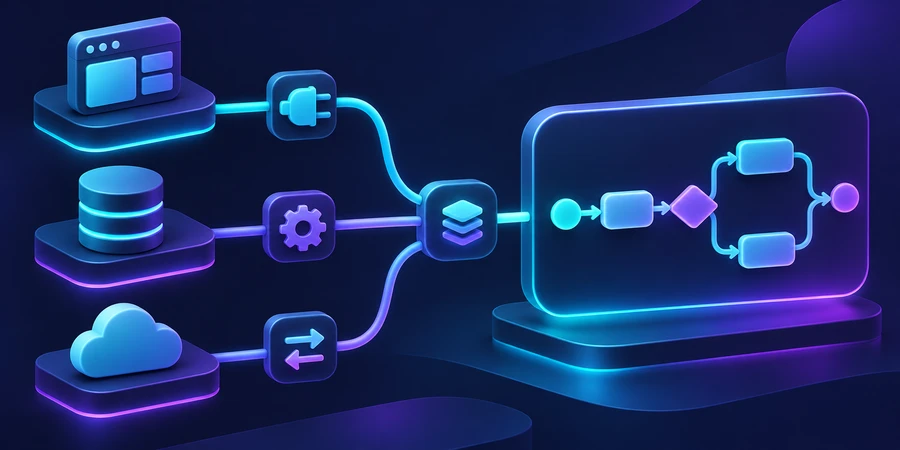
Agentic AI tools range from visual workflow builders to developer SDKs and integrated platforms. Compare them on connectors, permissions, traceability, failure recovery, and cost using the same business scenario.
Compare agentic AI tools on a real task
Suppose your support team wants to qualify requests and draft replies using its CRM and a policy library. Start by checking whether each tool can access the right record with restricted permissions. A connector that reads the entire customer database may need an additional authorization layer for this use case. A smooth demo under an admin account tells you little about the production design.
Write a one-page brief describing the required apps, identity, fields, prohibited actions, and handoff. Ask for a trace of a full run showing the source lookup, proposed outcome, reviewer decision, and any confirmed change. Check who can see the trace and how the team can remove test data. Compare every candidate against the same brief.
When a visual builder makes sense
A team that already runs workflows in n8n can test an agentic step alongside existing routing and approvals. The n8n documentation explains how it connects models and tools. Before committing, simulate a connector timeout. Ask an operator to find the failed step, identify whether a remote change succeeded, and retry only the operation that is safe to repeat. Do the exercise with the permissions the operator will actually have.
The workflow automation tools guide covers the surrounding capabilities. If your platform already handles triggers, deduplication, and approvals, you may need an agent only for a narrow classification or research step. Keep the routine path operable when the model is unavailable.
When to use an SDK or a custom integration
An SDK can fit when your application already knows the case context, permissions, and business rules. You can define narrow operations, validate tool arguments, and record progress between steps. Your engineering team still owns deployment, monitoring, and recovery. Test what happens to a pending approval when the application restarts. Verify who can reconcile an operation when the service times out after accepting it.
An integrated platform may offer a shorter path when identity and data already live in the same ecosystem. Verify connector permissions for systems outside that ecosystem. Ask where records are processed, how to export run history, and how to route cases that cannot be sent to a third-party service. An existing license is one factor in the decision. The cost of operating the integration matters too.
Compare the operations your team can actually authorize
Ask each candidate to show three things on the same case: read a record, propose a change, and recover after a timeout. Record which identity is used and what the operator can see. A connector may support a lookup without supporting a narrowly scoped update. Check the fields and actions your workflow needs, including whether it can pass an approved request ID into the destination system.
Test a change you expect to make later
Suppose your CRM adds a required field or your team changes a policy. Ask how to update the workflow, replay test cases, and roll back the configuration. Record what takes a few edits and what would require a developer. Check whether tests can run against an isolated workspace with separate credentials. That estimate belongs next to the license and model costs in your decision.
Use a repeatable pilot scorecard
Give each candidate the same 50 cases, including incomplete records, requests that require escalation, and an unavailable source. Track correct outcomes, access violations, recovery time, and full cost. For each failure, identify whether the issue came from the model, connector, business rule, or source data. That distinction matters because replacing the model will not fix a stale CRM record or an overly broad permission.
Add a maintenance exercise. Change a policy, disable a connector, and ask someone who did not build the workflow to find an affected case. Record how long it takes and which permissions they need. Ask the team to export the cases and rules it would need to move the workflow elsewhere. An attractive prototype can be expensive if day-to-day recovery depends on a single specialist.
Illustrative scenario, not measured results 50 cases per tool 45 correct outcomes 90% on the test batch
Compare total cost per correct outcome
In an illustrative test, one platform costs $45 including model usage, allocated licenses, and review, with 45 correct outcomes. The cost is $1 per correct case. A second platform costs $36 and produces 30 correct outcomes, or $1.20 per correct case. Use real volumes to estimate monthly costs and account for maintenance time and retries. If the process is tied to email campaigns or a CRM, compare the marketing automation tools already available before buying a second platform.
Example evaluation or acceptance criteria $45 illustrative total cost 45 correct outcomes $1 per correct outcome
Check switching costs before signing
Ask each candidate to export the workflow, its access map, and a set of run traces. List which elements are portable and which would have to be rebuilt. Keep business rules and test cases in documents your team owns. Recreate credentials in any new environment instead of including them in an export.
Follow the data through the entire run
Trace a request from intake to the model, tool calls, and logs. The hosting location of the orchestrator does not by itself determine where the connected services process information. Verify which fields leave your environment and who can see logs. Try a case with a field that must stay out of the model context and confirm that the platform can omit it or send the case down a different path. These checks often reveal operating constraints that a connector list will miss.
If a vendor cannot export approval decisions, ask how your team will review disputed actions after the contract ends. Include that operating requirement in the comparison.
Check how review scales
Ask the vendor to demonstrate a queue with several proposals waiting at once. An approver should be able to tell which case is oldest, which ones are urgent, and which need another team. Measure how much work it takes to transfer one.
How Dopweb can help you choose and integrate
We can define the scorecard with your team, run a limited evaluation, and map how each candidate handles permissions and failures in your environment. Deliverables can include the integration design, an operating cost estimate, and the tests needed before launch. When the choice is made, we can connect the tools and document who owns each account, how to pause a workflow, and where to look for unresolved cases.
Your team can keep control of the rules and evaluation set. If you add an application or change the model, Dopweb can rerun the cases and check how the change affects cost and review time. Explore Dopweb’s AI agents and workflow automation service.
Related guides on agentic AI
the agentic AI guide · the generative AI comparison · business use cases · how to build an AI agent · agent oversight
About the author — Patrick Chemoul, CEO of Dopweb
Patrick Chemoul leads Dopweb, an agency helping businesses with websites, software, and automation. The agency also provides AI agent integration and team training. Learn about Dopweb.
Frequently Asked Questions
Which tool should I try first?
Choose a candidate that connects to your stack with narrow permissions and gives you enough visibility to debug exceptions.
Is an SDK required?
No. Use one when your application needs tighter control over logic, state, and tests.
How do I compare pricing?
Measure the complete cost per correct outcome under the same workload.
How do I make switching easier?
Keep business rules, tool contracts, and evaluation cases documented separately.
Let’s Talk About Your Workflow
Tell us what your team wants the agent to handle. We’ll discuss the scope, integrations, and controls needed for a first pilot.